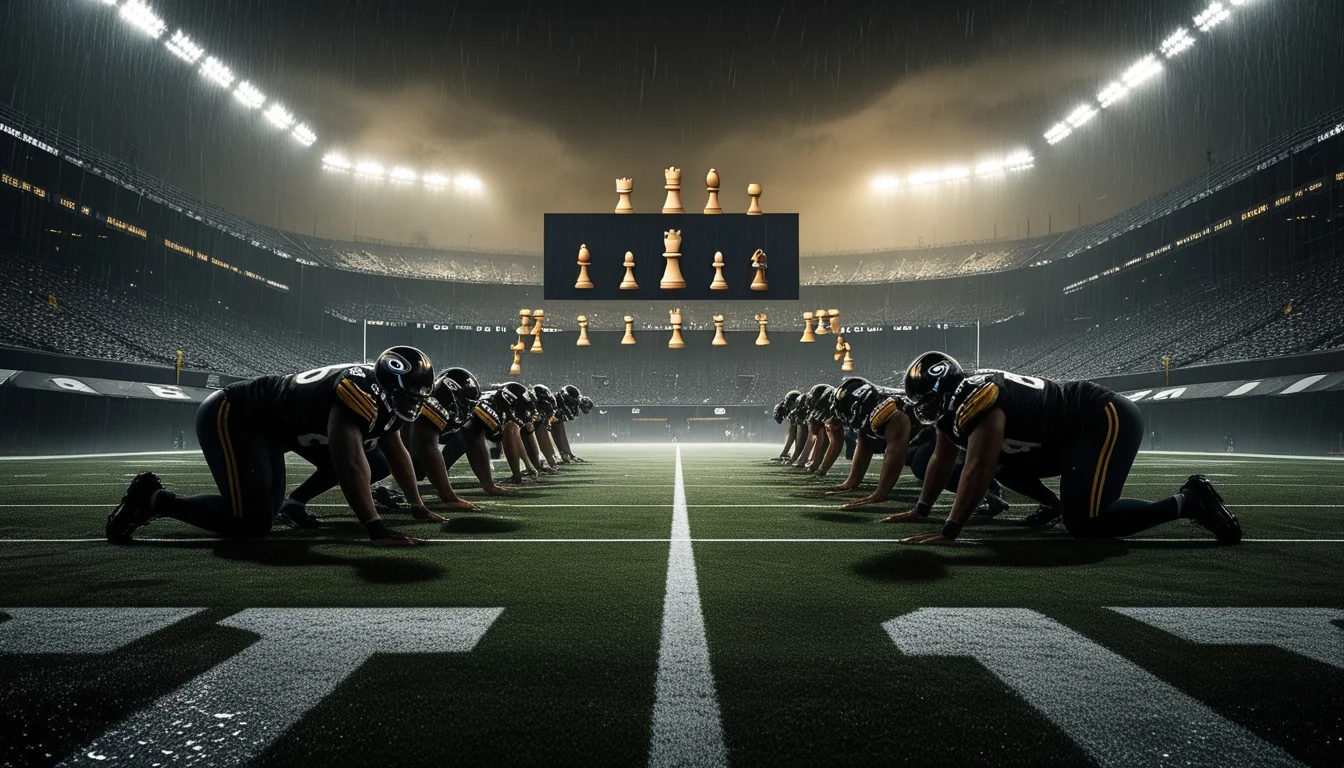
Sun Tzu wrote in The Art of War: "Be extremely subtle, even to the point of formlessness. Be extremely mysterious, even to the point of soundlessness. Thereby you can be the director of the opponent's fate."
Most Madden players read that and think about offense. Running flashy schemes. Breaking ankles with elite wide receivers. Throwing 60-yard dimes into triple coverage.
I read it and built a defense.
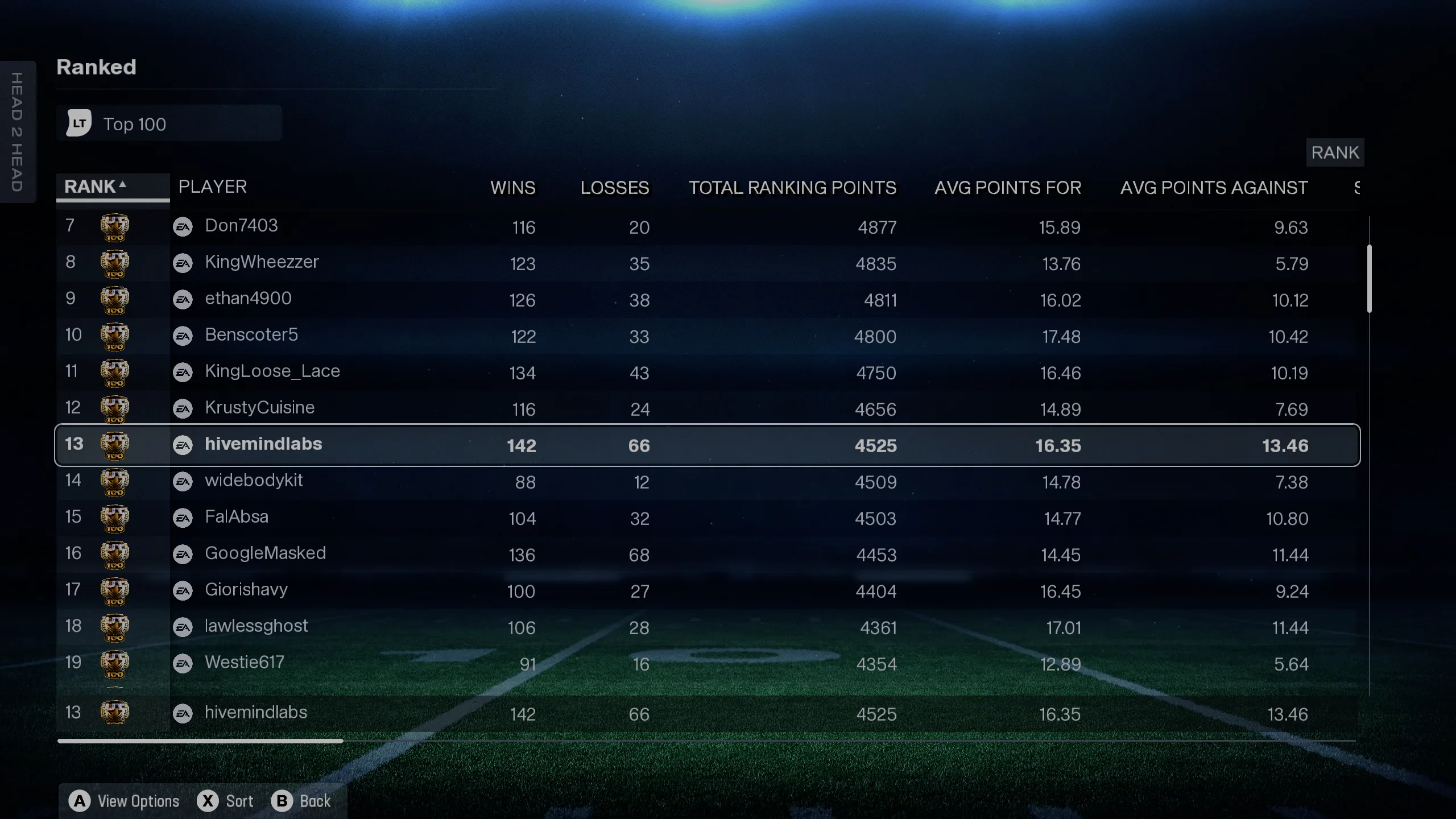
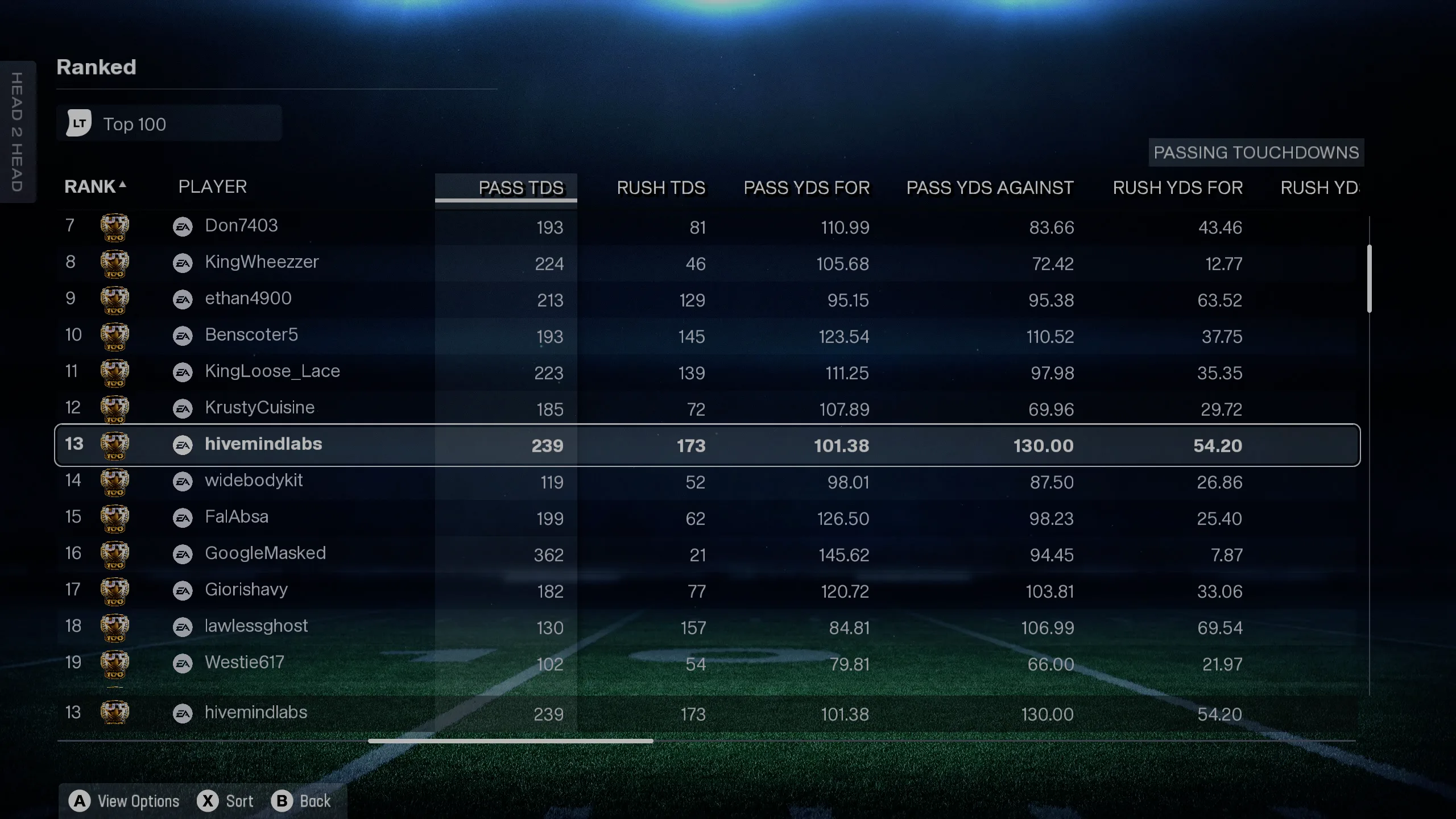
After 208 ranked games — 142 wins, 66 losses, currently sitting at #13 in the Top 100 H2H leaderboard — I can tell you with statistical certainty: the path to dominance isn't scoring more points than your opponent. It's making them feel hopeless before they even figure out what you're running.
The Blueprint: Shell Defense and the Art of Formlessness
Every scheme I run starts from the same base look: a shell formation, disguised to Cover 2.
Here's why this matters. In Madden, most experienced players have learned to read defenses pre-snap. They look at linebacker depth. DB alignment. Safety positioning. From those reads, they make protection calls, shift routes, and pick the right play to attack your coverage.
Shell disguise breaks all of that.
When your DBs and LBs align identically every single snap regardless of what you're actually running, you give your opponent nothing to decode. No tells. No adjustments. They can't distinguish whether it's Cover 2, Cover 3, man coverage, a zone blitz, or a house call — because the formation is identical until the ball is snapped. Your defenders don't react to the opponent's offensive personnel grouping. They maintain their assignments. Consistent. Disciplined. Unreadable.
Then you can mix in anything: straight zone, press man, edge blitzes, interior stunts, QB contain — all from the same pre-snap picture.
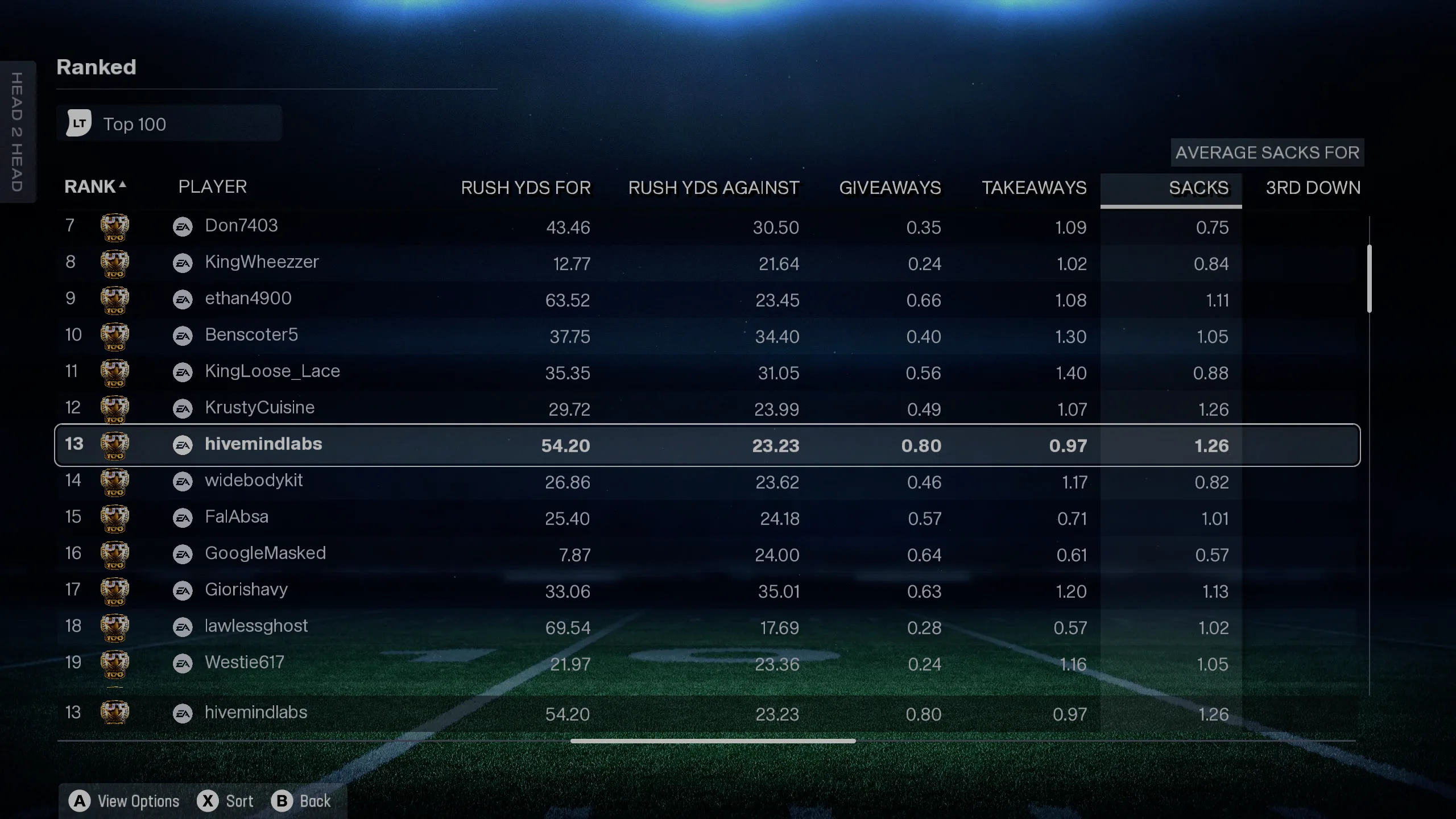
The result? 1.26 sacks per game. Because quarterbacks are guessing.
The Magic: The Gathering Parallel — You're Playing Azorius Control
If you've ever played competitive Magic: The Gathering, you know the Azorius Control archetype. Blue/White. Counterspells. Wraths. Card advantage. The deck does one thing brilliantly: it answers everything your opponent plays while building a quiet, inevitable advantage. It doesn't rush. It doesn't gamble. It waits until the game state is so tilted in its favor that the opponent's threats become irrelevant — and then it closes with a single, efficient win condition.
That's exactly what this scheme is.
On defense, every snap is a counterspell. Force an incompletion. Stop the run for no gain. Pressure the QB into a bad decision. The opponent's "aggro" offensive scheme bleeds out against a wall that never shifts.
And the numbers prove it works at the highest level: 13.46 average points allowed per game. Look at the leaderboard — nobody in the top 20 comes close. My 13.46 comes from philosophy, not just personnel.
23.23 rush yards allowed per game. The run is a non-factor. Every game.
The Sun Tzu Principle: Control the Battlefield, Control the Outcome
"The supreme art of war is to subdue the enemy without fighting."
What does that mean on a football field? It means making your opponent change their gameplan to respond to yours — not the other way around.
Once the shell disguise is established, your opponent faces an impossible choice every single drive:
If they run-commit: My pass game opens up. West Coast short routes, play-action attacks, and a mobile QB who can hurt you with his legs the moment you load the box. Quick strikes for easy yardage.
If they pass-commit or play soft: The ground game eats. Zone run concepts off the West Coast scheme create natural cutback lanes. A physical running game that grinds the clock and flips field position.
If they blitz: We're in empty sets and hot routes all day. Quick slants, bubbles, WR screens to the perimeter. Defensive players out of position means wide-open receivers and chunk plays.
If they play contain for the QB: He operates from the pocket. The run lanes stay clean because contain assignments are commitments away from the interior.
There is no correct answer. That's the point. The architecture of the defense forces the offense into a losing decision tree regardless of their play call.
This is why games end early. When your opponent realizes every adjustment backfires, the mental capitulation happens in the second quarter. They're still in the game statistically — but they've already lost strategically.
Combined Arms: The Offense That Completes the Lock
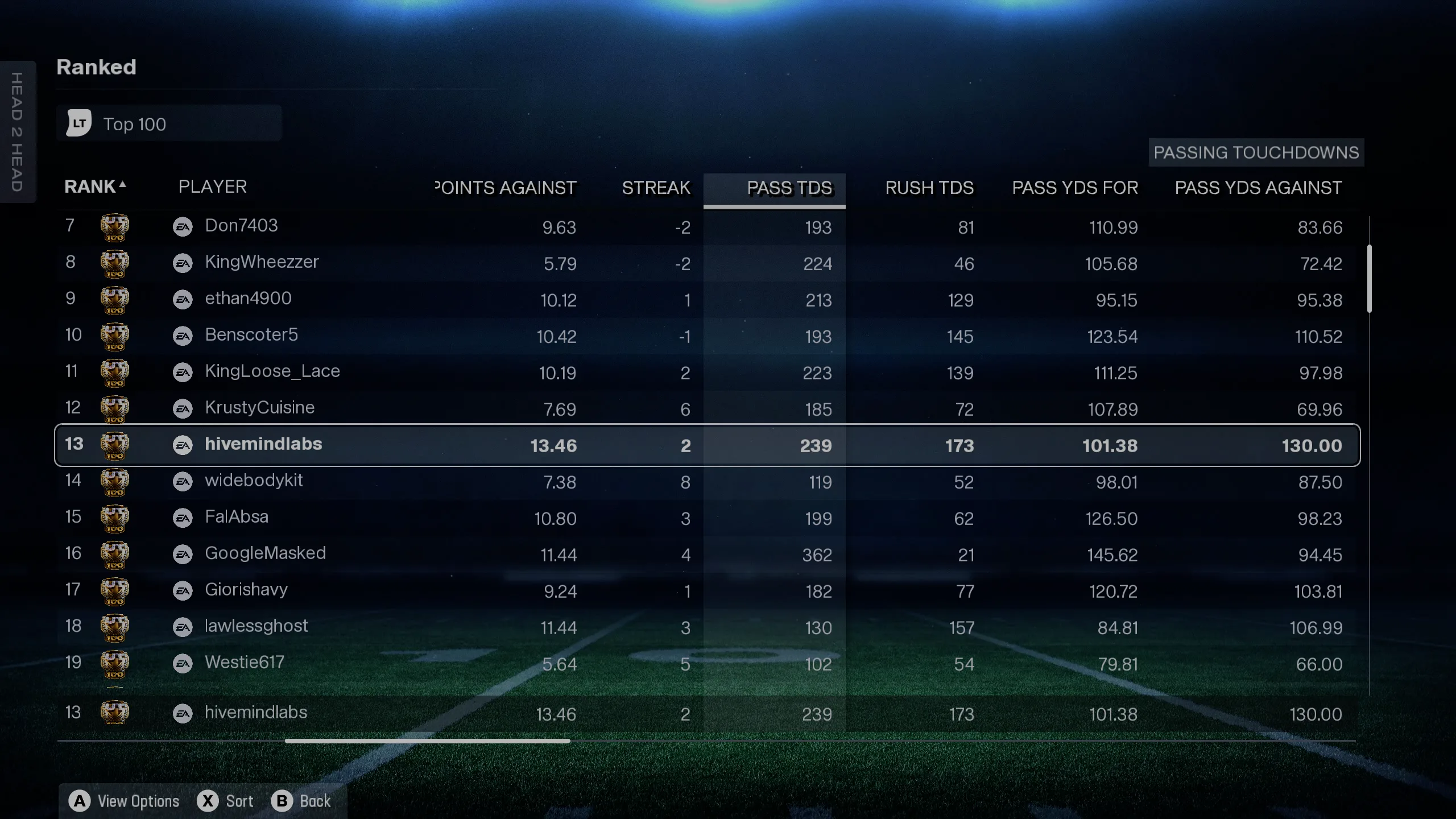
239 passing touchdowns. 173 rushing touchdowns. 412 total scores across 208 games.
The defense doesn't just stop drives — it creates them. 0.97 takeaways per game against 0.80 giveaways means a positive turnover margin game in, game out. Turnovers in your opponent's territory. Short fields. Easy scoring drives off chaos created by the defense.
And the offensive philosophy mirrors the defensive one: you never show your hand.
- WR screens and bubble routes to punish aggressive defensive line play
- Crossing routes and drags underneath to attack linebackers in space
- Streaks and go-routes for the shot plays — the Red in Magic terms, once you've established the control edge
- TE in every route concept — a third receiver most defenses fail to account for
- RB as a home-run threat — forces safeties to play deep, which opens the intermediate game, which opens play-action, which creates more run lanes. The ecosystem feeds itself.
The mobile QB is the final wildcard. He's not a scrambler by design. He's a threat by design. The threat of him breaking contain keeps defensive ends honest. It keeps outside linebackers from crashing down on runs. It keeps safeties from sitting in coverage windows. He doesn't have to run 20 times for the threat to control your defense — he just has to make it real enough that you can't ignore him.
That's option theory. You're playing mind football before the snap even happens.
The Results Speak
This isn't theory. This is #13 in the Top 100. This is a 68.3% win rate across 208 games at the highest level of H2H competition.
The players ranked above and below me on that leaderboard have elite rosters. Many have more losses. Several give up more points per game. They're playing the game. I'm controlling the game.
Defense doesn't just win championships.
Defense decides who gets to play offense.
Stats captured: February 22, 2026 — Season H2H Top 100 leaderboard.