The night before a major GT, most commanders are doing one of three things. They're rebuilding their list for the fourth time because they read a new matchup thread. They're memorizing the scoring differentials on three secondaries they've never prioritized before. Or they're staring at a Battle Round 3 decision they got wrong two weeks ago, trying to understand whether it was the list, the plan, or the execution that failed.
Usually, it was all three. And the inability to separate those failure modes cleanly — to know which variable broke your game — is the central cognitive problem of competitive Warhammer 40K.
This is not a skill issue. It's a capacity issue. Elite commanders carry an enormous analytical burden: 2,000 points of unit interactions, twenty-plus faction archetypes and their preferred counter-matchups, live opponent modeling during a game while simultaneously tracking primary score pacing and secondary efficiency. No human brain runs all three processes at full fidelity simultaneously. The best players in the world don't manage this alone — they have training groups, practice partners, coaches, and years of accumulated institutional knowledge to draw on. Most competitive players have none of that. They have their own experience, whatever they can absorb from content creators, and the clock ticking down to their next event.
Warscribe was built to close that gap. Not by replacing the commander. By giving every serious player the analytical council that top-tier competitors have always had access to.
The Design Decision
The core problem with most 40K analytical tools is that they address one variable in isolation. Army builders let you construct lists. Tier lists and matchup charts give you meta snapshots. Battle logs help you track game history. None of them talk to each other. None of them hold context across sessions. None of them adapt their analysis to your specific army, your specific play patterns, and your specific opponent pool.
Warscribe was designed around a different premise: that the cognitive load of competitive 40K is not three separate problems. It's one problem with three surfaces. List-building decisions are downstream of meta-reading. Meta-reading is incomplete without opponent modeling. Opponent modeling changes the list you should take. The variables are entangled, and any tool that doesn't reflect that entanglement will always feel inadequate when the pressure is real.
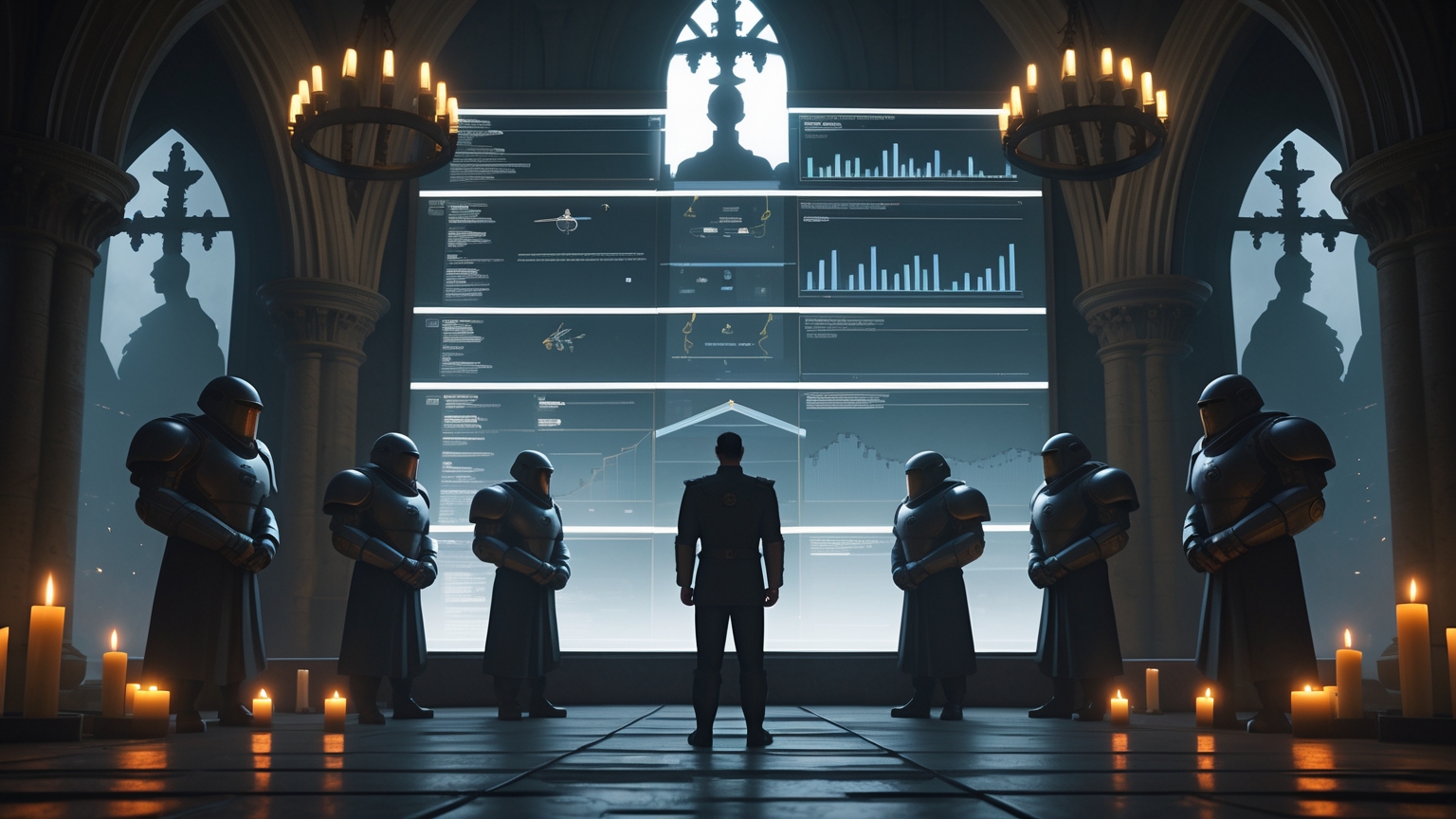
The solution is the oracle-and-advisor architecture. The oracle is the analytical core — the system that holds your list data, your battle history, your matchup records, your practice session notes. It processes without bias, without narrative, without ego investment in the decision you already made. The advisors are the interface layer — distinct AI personas with differentiated analytical priorities. A strategist. A tactician. A skeptic. Different lenses on the same underlying data.
The advisor system exists because commanders don't need one right answer. They need the right argument surfaced clearly enough to make a confident decision. A single-voice AI collapses complexity into a recommendation. A council exposes the tradeoffs.
The Player Experience
The first thing you notice when you log a game in Warscribe is that it asks better questions than you'd think to ask yourself. Not just win or loss. Not just score differential. Deployment type, attacker/defender status, your opponent's list archetype, which secondaries you ran, which scoring windows you hit or missed, where your plan diverged from your pre-game assessment.
It takes five minutes to log a game thoroughly. After your third or fourth game logged, it starts to mean something. Patterns emerge in the data that you couldn't hold in your head simultaneously — you might see that your Secondaries are consistently underperforming against mechanized lists, or that your win rate on Scramble for the Archaeotech drops significantly when you're defending. These aren't insights you lacked the skill to see. They're insights you lacked the capacity to track simultaneously with everything else.
Before an event, Warscribe's oracle gives you a threat assessment based on your logged performance data. Not generic meta analysis — analysis filtered through what your specific army does and where your specific record shows weakness. Then the advisors take it from different angles. The tactician focuses on round-by-round scoring sequencing. The skeptic asks what your worst realistic matchup looks like and whether your current list has an answer. You can push back, add context, ask follow-up questions. It's a briefing, not a report.
At the table, the value is different. You're not consulting Warscribe mid-game. You're playing with the mental clarity that comes from having done the analytical work beforehand — knowing your list's win conditions are explicit rather than intuitive, knowing which opponent archetypes stress your gameplan and how, knowing that the decision framework you're operating from has been tested against your actual results rather than assembled from Reddit threads and hope.
The Tactical Edge
The measurable change is not "better analysis." It's decision latency and decision confidence under pressure.
Every competitive player has experienced the moment in Round 4 of a tournament when fatigue, score pressure, and an unfamiliar matchup combine to make a straightforward tactical decision feel opaque. The commanders who perform consistently across a full event day are not the ones who think better under pressure. They're the ones who arrive at Round 4 having already made most of the hard decisions. They know their list's primary mission. They know which secondaries they'll play against which archetypes. They've modeled their opponent's likely priority sequence. The in-game decisions that remain are execution, not analysis.
Warscribe compresses the pre-game analytical work significantly. Matchup prep that used to require an hour of active research — parsing tournament results, rewatching relevant games, querying experienced players in your community — happens in a structured session with your battle history providing the foundation. The oracle doesn't replace that work. It structures it so you extract more signal from the same time investment.
Over time, the battle log creates something more valuable than any single analysis session: an honest record. Not the version of your games you remember. The actual version, with the scoring data and the matchup context and the decisions you logged while they were still fresh. That record is what separates commanders who improve systematically from commanders who improve by accident.
Warscribe is not fully built yet. The oracle-and-advisor system is the foundation, but the command framework it enables — integrated tournament management, opponent modeling across competitive history, dynamic list refinement based on your actual results — is the architecture being constructed around it. The features being released now are not products. They're doctrine taking shape. And doctrine is only proven in the field.